Maths
Maths at Marlborough – Implementation Plan
At Marlborough, we believe that a high-quality mathematics education is crucial in providing a foundation for understanding the world and we endeavour to provide this for all our pupils. We work hard to embed the belief that everyone can achieve in mathematics alongside a sense of curiosity and enjoyment around the subject. Each class at Marlborough follows a “teaching for depth” approach to mathematics, which is sometimes termed mastery. This approach enables all children to ‘master’ the mathematics curriculum by carefully building on small steps within the key domains as outlined in the national curriculum. Such approach draws heavily upon research and recommendations of the Education Endowment Fund
Statement of Intent for our Curriculum
Through carefully sequenced lessons, our aim is to develop efficient mathematicians who are inquisitive and excited by mathematics, recognising the creative aspect of number and mathematical processes. We want our children to experience the power and enjoyment of maths through making connections across key domains as well as having regular opportunities to reason and problem solve.
We further aim for our children to develop a long-term, secure and adaptable understanding of mathematics through a progressive acquisition of knowledge, understanding and skills. Careful sequenced learning that is gradually twisted and deepened as well as well-timed repetition and retrieval practise helps our children to know and remember more.
We want our children to be:
- Confident and independent mathematicians who are able to explain their reasoning both orally and written
- Efficient in all four operations; able to make decisions around the most efficient strategy to solve a calculation
- Reflective learners who recognise the benefit of working logically and systematically
Curriculum Design
Whilst delivering the National Curriculum, Marlborough use White Rose Maths Hub long term plans and resources as well as the NCETM spine documents which all under-pin our pedagogical approach and offer guidance so that teachers can plan and write engaging lessons that meet the needs of our children. In addition, Marlborough teachers also use a toolkit bank of activities that span throughout the school and are adapted to meet year group objectives. Such designs ensure that children in ever year group are encouraged to make connections, reason, problem solve and be systematic as well as reducing extraneous load for our learners by ensuring new knowledge is not lost through presentation of tasks.
Through lessons designed to engage and excite the children, small steps for both conceptual and procedural understanding are planned for, giving consideration to common misconceptions that are likely to occur. Such misconceptions are used as important learning tools in allowing children to develop their knowledge of self and task within mathematics. When misconceptions arise, teachers skilfully deploy quality-first teaching strategies to support learners. If necessary, further support will be offered to learners in the form of timely, sometimes same day, intervention to ensure gaps and misconceptions are addressed before moving on.
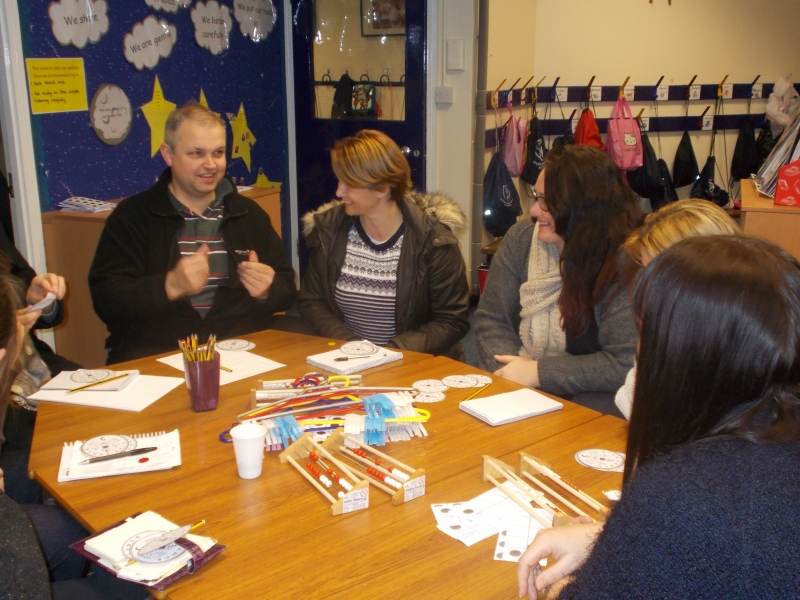
Recognising that manipulatives are an important tool in enabling learners to ‘see’ maths, teachers will, when appropriate, model using concrete, pictorial and abstract resources and representations across all year and ability groups: this supports our aim to help children become confident and independent mathematicians, allowing children to select from a range of strategies for both efficiency, to support success and deepen understanding.
At Marlborough, we believe that a secure understanding of mental strategies is crucial in ensuring that learners meet our aim of becoming efficient mathematicians. A further progression document around the development of mental strategies has been created to aid teachers in building up skills around mental strategies and should be read in conjunction with this document. Procedural methods for calculation are taught alongside mental methods for fluency and variation to allow children to become efficient in choosing when to deploy written and mental strategies. Children will be expected to apply this learning within a range of contexts rather than completing extended procedural practice.
Typical Lesson Structure
At the start of a most maths lessons, children will be expected to activate their prior knowledge by revisiting earlier calculations and content usually through the use of a Flashback Four activity. Here learners are expected to recall learning from previous weeks, year groups and key stages to ensure learning remains fresh. Children will explore different patterns and connections within mathematics which can be applied to all areas of mathematics.
Then the class explores the new content, problem or calculation to encourage inquisitiveness and to unpick the learning for that lesson, followed by a couple of further examples to develop smell steps in depth of learning while providing opportunities for children to discuss, explain their reasoning and processes towards questions.
The children will then complete an independent task of questions similar to those discussed during whole class teaching which are then spun so that the children can further demonstrate their application of their understanding. It is at this point that teachers work with children who they have assessed to need more teaching and support. Some children may move on to problems of greater complexity that may contain more complex steps, combine more than one aspect of maths, a higher level of reasoning, a range of starting points or finding all the possibilities with constraints.
At the end of the session, most teachers will encourage children to self-assess their learning. We encourage positive ‘can do’ attitudes so our children can see that unpicking mistakes are valuable opportunities to learn, review and evaluate their thinking and have a greater understanding. It is also an opportunity to individually, with peers or with the teacher to reflect and assess their learning and think about next steps and targets. This feeds into our hope for all learners to be more independent as well as developing their knowledge of self to inform metacognitive discussions and become better at self-monitoring.
At Marlborough we believe that feedback in the moment is best and therefore teachers will provide immediate verbal feedback where possible. This allows misconceptions to be addressed early and further support deployed where necessary. Children will also regularly presented with opportunities to self or peer mark to enable them to complete, correct and go deeper with their learning.
There will be times when this lesson structure does not suit the learning taking place. When longer investigations, games or kinaesthetic activities are taking place, the structure will be that which best suits the learning process.
On a regular basis, children will be given routine arithmetic questions or problems as a low stakes recall of previous teaching on a range of topics. Summative assessments also take place across all year groups every term to allow retention and application to be closely monitored and addressed by teachers, subject leaders and senior leaders.
Opportunities for self-practise
At Marlborough, we recognise the value of independent practise in allowing learning to become embedded. Teachers therefore usually set weekly mathematics homework which will range in medium from online platforms such as Timestable Rockstars to more traditional worksheets. Children are encouraged to apply in class learning at home to consolidate their knowledge and understanding further. Recall practise of key fluency facts is also a priority and parents are encouraged to support their child with this. More information on resources and websites can be found on the class page section on our school website.